We make metal feet and legs, so the fair thing is to say up front where wood beats us. It often does. The metal-versus-wood question is not about which material is "better" — it is about matching the base to how hard the chair gets used, what your tooling can absorb, and how the part ships. Get those three right and the choice makes itself.
Strength and duty cycle
Metal — steel tube or cast aluminium — takes repetitive abuse without complaint, which is why task chairs, bar stools and contract seating almost always sit on it. A wood leg is plenty strong for a dining or accent chair, but it fatigues differently: a glued or doweled wood joint that takes a daily side-load will eventually creak and split, where a tapered metal joint tightens under that same load. If your chair will be sat in hard, by different people, all day, metal is the lower-warranty bet. If it is a home dining chair used a few hours a week, wood's strength is not the limiting factor and you are paying for headroom you do not need.
Cost and tooling
This is where it gets less obvious. A simple wood leg can be cheaper in low volume because it needs little hard tooling — turn it, sand it, finish it. A cast metal leg carries a mould cost up front, so it only beats wood once you spread that tool across volume. Welded tube sits in the middle: cheap material, but labour in the jig and the weld. So the cost answer depends entirely on your run size. We are honest with buyers about this: below a few thousand units of a bespoke profile, a wood leg or a shared-tooling stock tube leg is usually the smarter spend than cutting a dedicated casting die.
Steel tube deserves its own note because the spec hides in the wall thickness, not the diameter. Two legs can both be "22 mm round tube" and behave completely differently if one is a 1.0 mm wall and the other a 1.5 mm wall. The thicker wall is stiffer and carries more load, but it is heavier and costs more steel per leg; the thinner wall saves money and weight but can dent or buckle under a heavy user. We size the wall to the duty, not to the cheapest mill option, and we will quote you the wall we recommend rather than the wall that wins a race to the bottom on price. If a competitor's tube leg is suspiciously cheap, the wall thickness is usually where the money went.
Freight and finish
Metal wins on freight when it ships knock-down — a nested metal foot packs flat in a way a fixed wood leg cannot, which we cover in our flat-pack freight note. On finish, wood is warm and can be re-sanded if scuffed; metal needs a coating decision — powder coat or chrome — that we break down separately in our powder-versus-chrome piece. Wood also forgives a small ding better; a chip in chrome is permanent in a way a scratch in oiled wood is not.
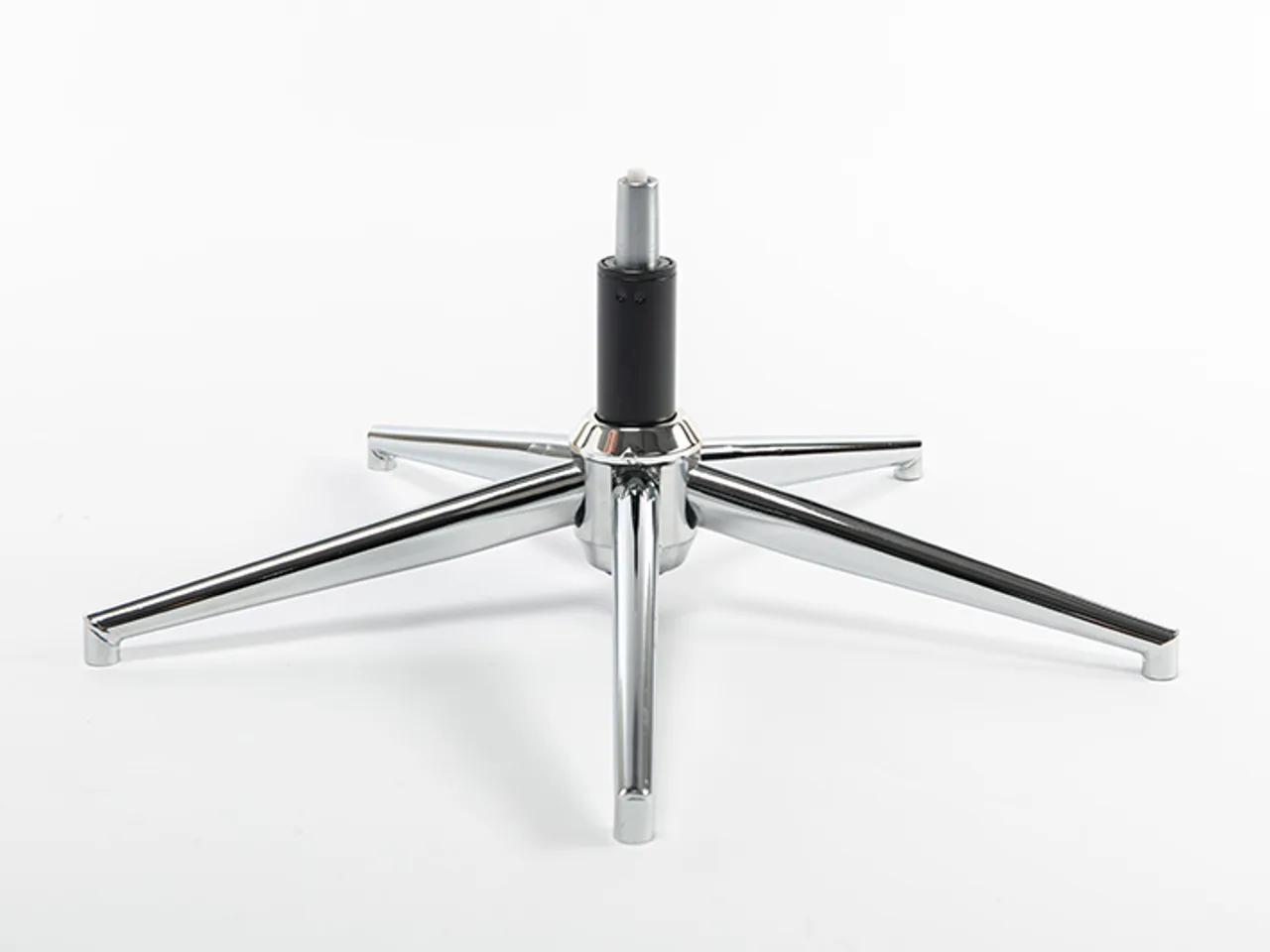
Weight cuts both ways. A metal base is usually heavier than a wood one of the same footprint, which is good for stability — a heavier five-star base resists tipping, and the BIFMA stability test cares about exactly that — but it adds to your per-piece shipping weight if you weigh out before you cube out. Cast aluminium is the middle path: lighter than steel, heavier than wood, and it takes a chrome or polished finish that wood cannot. For an executive chair that needs both a stable base and a bright finish, aluminium is often the answer that wood and steel both lose to.
Where metal quietly loses
To stay honest: metal has two real weaknesses beyond cost-in-low-volume. It conducts temperature, so a bare metal leg can read cold to the touch in an unheated room and hot if it sits in sun — rarely a dealbreaker, but a reason cafe and outdoor furniture sometimes prefers wood or a coated metal. And metal telegraphs poor design: a thin, under-walled steel leg looks and feels cheap in a way a modest wood leg does not, because wood hides a lot of structural sins behind its grain. If your chair is a budget line where the leg has to look better than it costs, a simple turned wood leg can out-perceive a thin metal one at the same price. We would rather tell you that than sell you a tube leg that makes your chair feel cheaper than it is.
The trade-off in one line
Metal for duty, volume and flat-pack freight; wood for warmth, low-volume custom shapes and field repair. Most factories we work with run both — metal on the workhorse SKUs, wood on the lifestyle line — and that is the right instinct.
How we help you decide
We only make the metal side, so we will not pretend a casting is right for a 500-unit accent chair. Tell us the chair, the run size and the duty, and we will tell you honestly whether to tool metal with us or stay on wood for that SKU. Where it is a metal job, we build to BIFMA/EN methods and can arrange testing per order. Start at our contact page, read about drawing-built and private-label legs, or email [email protected].