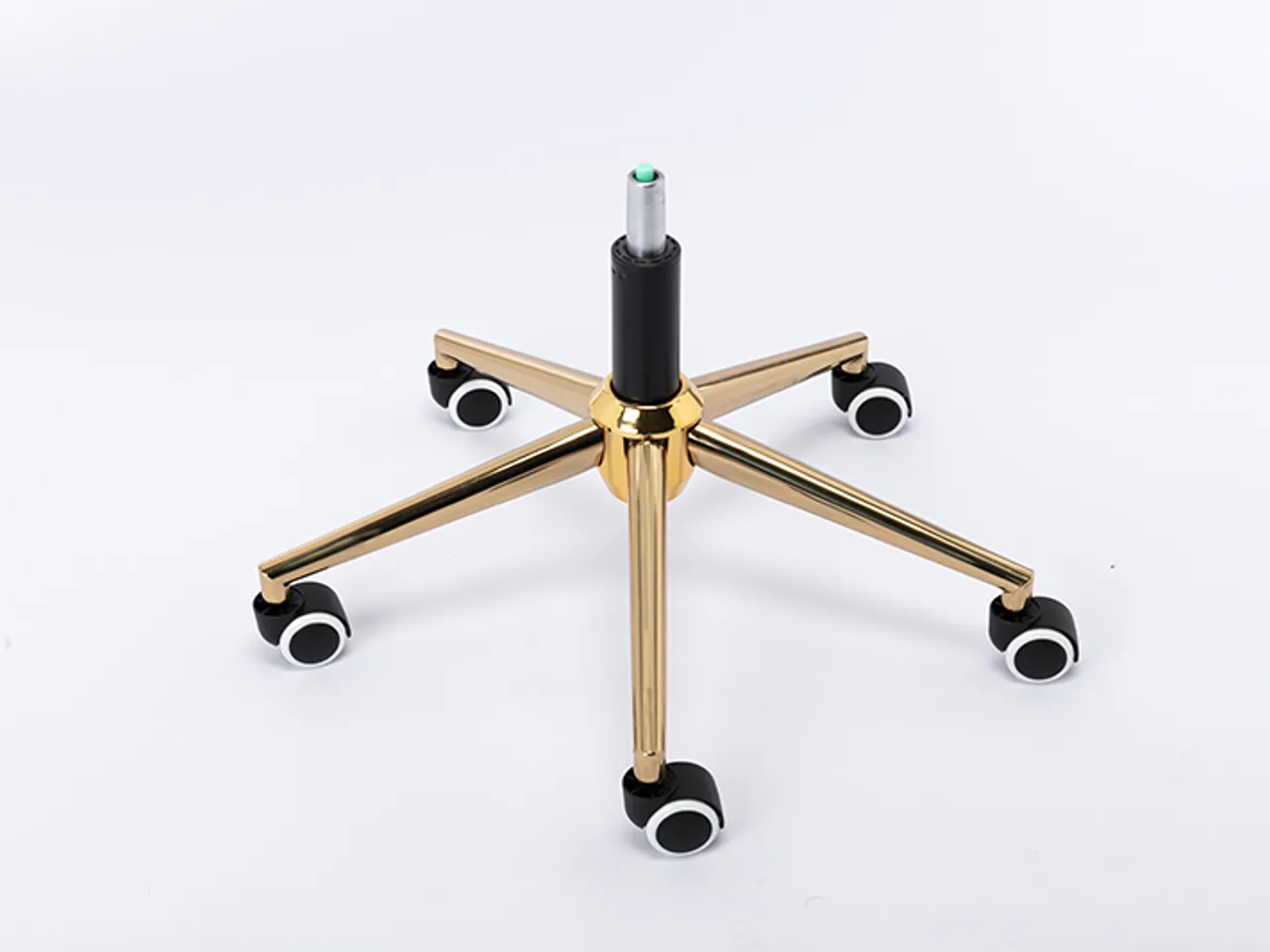
Finish is the last decision on a chair leg and the one buyers most often make on the catalogue photo instead of on the spec. Chrome looks brilliant in a render. Powder coat is the one that survives the container, the loading dock and three years of a cleaner's mop. Both are legitimate — the right answer depends on where the chair lives.
What each finish actually is
Chrome plating is an electroplated metal layer — bright, mirror-hard, and the look most people mean by "chrome leg." Powder coating is a dry pigment fused onto the metal in an oven, building a thicker, slightly textured film that comes in any colour, including a chrome-look metallic. They protect differently. Chrome is hard but thin, so it resists scratching well yet can chip or, over years in damp conditions, peel at an edge. Powder coat is thicker and more forgiving of impact: independent comparisons give it the edge on chip, scratch and corrosion resistance.
The corrosion numbers
If the chair will ever see moisture — a canteen, a poolside cafe, a humid port on the way to you — corrosion resistance stops being a detail. A standard polyester powder coat on steel has been documented passing 3000 hours of continuous 5% salt-spray testing, and even a blasted-and-coated part will typically clear 1000 hours without significant corrosion creep. Chrome's corrosion story is good when the plating is intact and maintained, but it depends on that thin layer staying unbroken; one deep scratch to bare steel and rust starts under the bright surface. For anything heading somewhere humid, we steer buyers to powder coat and say so plainly.
Prep decides everything — on both finishes
Here is the part neither marketing photo shows you: the finish is only as good as the metal prep underneath it. Powder coat fused over oily, un-degreased steel will flake no matter how thick the film; chrome plated over a poorly polished base mirrors every scratch and pit. The salt-spray numbers above — 3000 hours for a good powder coat, 1000-plus for a blasted-and-coated part — assume the surface was cleaned, blasted or phosphated properly first. When you compare two quotes and one is much cheaper, the saving is almost always in the prep step you cannot see in a photo. We blast and pre-treat before coating because skipping it is how a finish that tested fine in a lab fails in a damp warehouse.
The compliance angle on chrome
If your market is Europe or you sell to buyers who screen on chemical compliance, chrome carries a question powder coat does not. Traditional decorative chrome plating has historically involved hexavalent chromium, which is restricted under REACH, and that has pushed a lot of the industry toward trivalent processes or away from chrome entirely. Powder coat sidesteps the issue. We are not your compliance lawyer, but if a buyer is asking for REACH documentation, that conversation is easier with a powder-coated leg than with a chrome one, and it is worth raising before you tool a chrome SKU for a European programme.
Cost and colour
Powder coat is usually the cheaper, more flexible finish at production volume, and it gives you colour matching to a brand palette — matte black, a custom grey, a metallic. Chrome costs more to do well, and doing it badly is worse than not doing it: thin or poorly prepped chrome is exactly the finish that peels and generates returns. So if your brand calls for a true bright-mirror executive look, chrome is worth paying for — on our cast aluminium base legs we offer chrome and gold precisely for that market. If the leg lives in a school, a canteen or anywhere wet, powder coat is the lower-risk, lower-cost call.
Repair, touch-up and the long view
Finishes age, and how they age matters for a buyer who carries a warranty. A powder-coated leg that gets scratched can be touched up with a matched paint and, in a refurb, stripped and re-coated entirely — the part is recoverable. Damaged chrome is effectively not repairable in the field; once the bright layer is broken you are looking at re-plating, which means shipping the part back to a plater, which nobody does for a chair leg. So over a multi-year contract, powder coat is the finish that lets a facilities team keep the furniture looking maintained, while chrome is a finish you accept will look its age once it is scratched. For hospitality and contract buyers who think in five-year cycles, that repairability is worth more than the showroom shine.
The trade-off in one line
Chrome for the executive mirror finish and dry indoor use; powder coat for colour, impact resistance, humid environments and tighter budgets. We will not sell you chrome on a stool destined for a beachfront restaurant just because it photographs well.
How we finish your order
We finish to your spec on tube legs and knock-down feet alike, match powder colours to a sample, and can quote both finishes so you compare cost against the environment the chair will live in. Finishes are built to hold up in normal use; salt-spray and adhesion testing can be arranged per order — we do not pre-print a certificate that may not match your colour and substrate. Send your finish target through our contact form, see how private-label finishing works, or email [email protected].