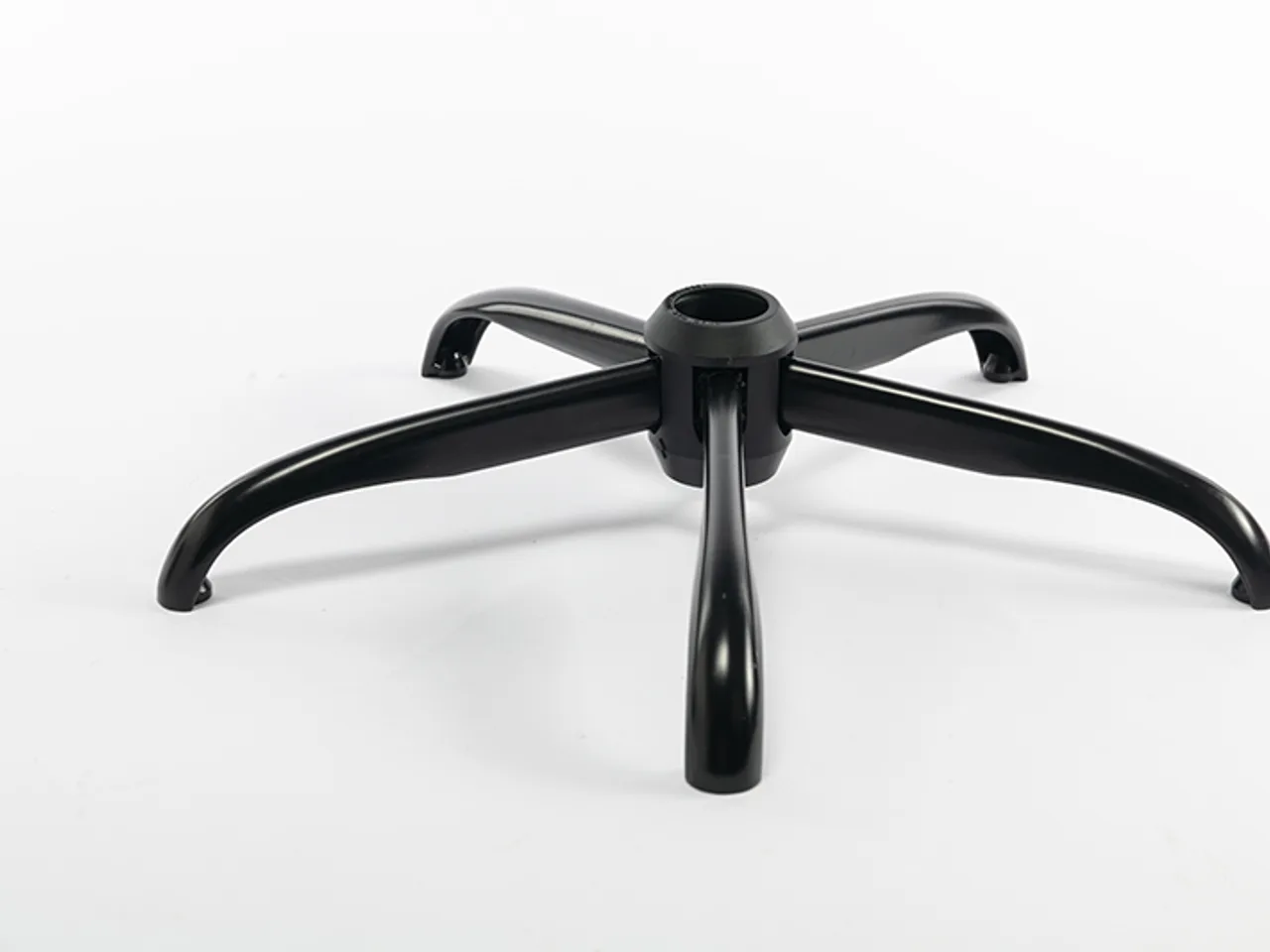
When a wrong part arrives at a chair factory, the instinct is to blame the component supplier, and sometimes that is fair. But having sat on the supplier side of a lot of these post-mortems, the honest pattern is different: most wrong parts were built exactly to what was sent — and what was sent was a photo, a competitor sample of unknown vintage, and a sentence in a chat window. The fix is not a better factory. It is a better spec pack. Here is what a complete one looks like for a chair leg or foot, and none of it is exotic.
One dimensioned drawing beats five photos
A photo shows what a part looks like; a drawing says what it is. For a tube leg the difference is the wall: two legs can photograph identically and carry a 1.0 mm and a 1.5 mm wall, which are different parts with different strength, weight and price. The drawing needs a section view that shows the wall, dimensions in millimetres stated as millimetres — we have seen a 25.4 turn into a 25 because nobody wrote the units — and the handful of dimensions that actually matter flagged as critical. Not every number on a leg is worth arguing about. The mating diameters are; the radius on a decorative curve usually is not. Marking the difference tells us where to spend the inspection effort, and it tells you what to check when the samples land.
The lines a leg or foot pack must contain
Our checklist, in the order disputes actually happen:
- Material and grade — “steel” is not a spec. Tube grade, casting alloy, or nylon type, written down.
- Tube OD and wall — both, always. The OD without the wall is half a part.
- Overall height and stance — for a five-star foot, the diameter across arms and the height to the column seat decide stability and gas-lift fit.
- The mounting interface — the column bore or taper reference. This is the single most under-specified feature we see, and it is the one that makes a part useless rather than merely imperfect.
- Finish and colour — coating type, colour code, and gloss level. “Black” covers a dozen finishes; a RAL number covers one. Our finish note explains why the coating choice also changes the fit on a taper face.
- The floor end — glide type or caster stem size, because the bottom of the leg is a fit too.
- Target weight — a tolerance-free sanity check. If our quoted part is 80 grams off your target, one of us has misread something, and weight finds it before tooling does.
A component never works alone
The most expensive misunderstandings are not about the part — they are about the parts it touches. A base leg mates with a column; a foot mates with a gas lift; a leg mates with a seat plate somebody else supplies. If the spec pack only describes our part, we are guessing about the other half of every joint. So send the mating part, or its drawing, or at minimum its source and model. Better still, send a physical sample of the assembly the part lives in. Couriering one used chair costs less than one round of wrong samples, every time, and it answers questions neither side knew to ask.
Pair the paper with a sealed sample
A drawing and a sample are not rivals; they answer different questions. The drawing settles dimensions and materials. The sample settles everything a drawing is bad at — how the finish actually looks under warehouse lighting, how a taper feels when it seats, how much flex counts as normal. Our standard loop on a new part: you approve our first articles against the drawing, then both sides keep an identical signed sample. When a question comes up in production a year later, the argument is settled by pulling two sealed parts out of two cupboards, not by competing memories of a video call. The samples cost a few dollars and a shelf; the disputes they prevent cost containers.
Revision control: the unglamorous half
The second wrong-part factory is time. A part gets tweaked — a wall goes up, a colour changes — and six months later a reorder arrives referencing “same as last time,” except your engineer and our file disagree about when last time was. The cure is a revision letter on the drawing, a date, and one line saying what changed. One master file, held by one named person on each side, and the chat-window photo demoted to what it is good at: quick questions, never the contract. When we counter-sign a drawing rev before tooling, that signature is the thing that makes a year-later reorder land identical — cheap formality, expensive to skip.
What a good pack buys you in practice
Self-interest disclosed: a complete pack makes our life easier. But it pays you back in hard currency — a quote that does not need three clarification emails, samples that pass first time, and a reorder in 2027 that matches the container from 2026. We build legs and feet to BIFMA and EN methods, testing can be arranged per order, and when a drawing is thin we will say so before we cut metal rather than after. If you have a part you want built — or a photo you want turned into a real drawing — start at our contact form, see how ODM and drawing-built work runs, or email [email protected].